

Highlights of the month

In July 2026, the electricity sector was marked by new regulatory developments involving generation, transmission access, distribution and energy trading.
In the generation segment, the Ministry of Mines and Energy (“MME”) regulated the compensation mechanism for generation curtailments affecting wind and solar power plants, as provided for in Federal Law No. 15,269/2025. In addition, the Brazilian Electric Energy Agency (“ANEEL”) also advanced in the discussion of the A-1, A-2 and A-3 Existing Energy Auctions, opening a public consultation to improve the respective tender notices, and reaffirmed, its position on the criteria applicable to the imposition and calibration of tender-related fines.
In the energy storage segment, ANEEL approved the opening of Public Consultations No. 22 and No. 23 of 2026 on the tender notices for the first Capacity Reserve Auctions exclusively aimed at the contracting of storage systems.
In the transmission segment, ANEEL’s Board of Directors initiated the analysis of the regulation of the National Policy on Access to the Transmission System (“PNAST”), including proposals for the implementation of the Access Seasons and for the treatment of agents that had already structured their projects under the previous rules.
In the distribution segment, ANEEL opened a public consultation to revise the productivity component of the X Factor, with a proposal to reform the methodology applicable to tariff review processes from 2027 onwards.
Furthermore, in the energy trading segment, ANEEL opened Public Consultation No. 025/2026 to adapt the Trading Rules to the contracts of the No. 2 and No. 3 Capacity Reserve Auctions in the Form of Power of 2026 (“LRCAP 2026”), including amendments related to penalties, scheduled outages, Unitary Variable Cost (“CVU”) and financial settlement.
Finally, ANEEL analysed the competition limits applicable to the activities of a distribution company and a trading company belonging to the same economic group, and upheld the classification of the conduct as a regulatory infringement whilst proposing a significant revision to the fine calibration.
Power Generation
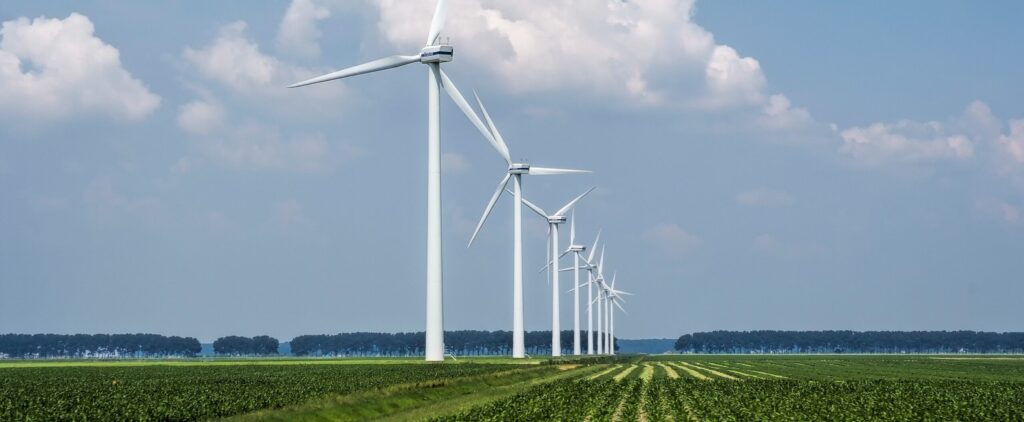
MME regulates compensation for generation curtailments of wind and solar power plants
On July 21, 2026, the MME published Ordinance No. 140/2026, regulating the compensation for generation curtailments of wind and solar photovoltaic power plants, as provided for in Federal Law No. 15,269/2025.
In this context, the Ordinance governed the treatment of curtailments that occurred between September 1, 2023 and November 25, 2025, limiting compensation to events arising from external unavailability and electrical reliability, and not covering curtailments related to energy oversupply.
Interested project owners wishing to join the mechanism were required to submit a preliminary expression of interest within 20 days from publication of the Ordinance, a stage that has already closed. From this point, the procedure proceeds to the submission of documentation, the calling of eligible agents and the execution of the Commitment Agreement. In addition, the Ordinance established a 60-day period from its publication for the Energy Trading Chamber (“CCEE”) to approve and publish the Trading Rules and Procedures required to implement the mechanism.
Finally, participation will be irrevocable and non-retractable and will entail a waiver of administrative, arbitral or judicial claims relating to generation curtailments and the associated reimbursements. The National Grid Operator (“ONS”) will be responsible for assessing and classifying the curtailments, while the CCEE will calculate and operationalise the financial compensation within the accounting and settlement of the Short-Term Market (“MCP”).
From a legal perspective, any decision to join the mechanism requires an individual assessment of its effects, including the legality and internal approval of the relevant instrument, the impacts on Power Purchase Agreements in the Regulated Market and Reserve Energy Agreements, ongoing lawsuits and arbitration proceedings, as well as any potential implications for financing agreements, covenants and debt structures. The effects on self-production arrangements should also be assessed, including with respect to risk allocation and any requirement to obtain consent from offtakers, as well as the implications for future M&A transactions.
For further information on the compensation mechanism, its requirements and key points of attention, please see our report on the topic.
ANEEL opens public consultation on the tender notices for the A-1, A-2 and A-3 existing energy auctions
ANEEL opened Public Consultation No. 19/2026 with a view to improving the tender notices for the A-1, A-2 and A-3 Existing Energy Auctions. The auctions will contract energy from projects already in commercial operation, with supply commencement in 2027, 2028 and 2029, respectively. The contracts will have a term of two years.
The Public Consultation proposal provides for the sequential holding of the auctions, commencing on November 13, 2026, and increases the financial guarantee required from sellers, from three months to one year of sale revenue. In the A-2 and A-3 auctions, sellers must submit this guarantee at least six months prior to the commencement of supply. The measure seeks to reduce the financial impact on distribution companies in the event of non-performance of the contracts.
The consultation will also discuss the delivery sub-market for the energy. Currently, the seller indicates the delivery region, whilst the distribution companies are exposed to price differences between sub-markets. The proposal considers transferring delivery to the buyer’s sub-market, with the aim of adjusting the allocation of these risks in the energy purchase and sale agreements.
Interested parties may submit contributions until August 24, 2026.
ANEEL reaffirms criteria for the imposition of tender-related fines
On July 21, 2026, ANEEL’s Board of Directors analysed an administrative appeal challenging the tender-related fine imposed for non-compliance with the implementation schedule of a thermoelectric power plant, as set out in the New Energy Auction No. 06/2014-ANEEL (A-5 type), and upheld in full the penalty imposed by the technical department, in the amount of R$ 235,606,269.60.
In this context, ANEEL reinforced that the application of the contractual fine does not depend on the prior quantification of losses, given that the penalty does not have a compensatory nature. According to the position adopted by the Agency, tender-related sanctions serve preventive, educational and repressive functions and seek to ensure compliance with the obligations assumed by the agents and the preservation of sectoral planning.
In addition, ANEEL highlighted that the determination of the fine amount must observe duly reasoned calibration criteria. In the case analysed, the technical department applied a previously defined parametric formula, although the vote recognises that room remains for administrative discretion in setting the penalty, provided that the grounds relied upon are expressly stated and may be contested by the agent.
Finally, the Board reaffirmed that the imposition of a fine may be cumulated with other consequences set out in the tender notice, including the termination of the authorisation, given that the termination of the legal relationship does not extinguish liabilities arising from prior non-compliance.
ANEEL sets out new rules for self-generation
ANEEL’s Board of Directors approved new guidelines for the application, by the CCEE, of the self-generation rules set out in Article 16-B of Federal Law No. 9,074/1995, as amended by Federal Law No. 15,269/2025. To be treated as equivalent to a self-generator, the consumer must hold aggregate contracted demand of at least 30 MW, formed exclusively by consumption units with individual demand equal to or greater than 3 MW. ANEEL also defined that consumers classified as equivalent under the previous legislation must regularise their situation, where necessary, to comply with the new criteria.
The guidelines also detail the corporate requirements for classification as an equivalent self-generator. Direct or indirect participation in the company holding the authorisation must take into account voting share capital, with the CCEE being responsible for assessing each corporate structure to identify control, affiliation and common control relationships. Where shares without voting rights carry economic advantages greater than those of voting shares, the CCEE must verify compliance with the minimum 30% participation requirement set out in law, on the basis of documents such as articles of association, shareholders’ agreements and financial statements.
With regard to small-capacity power plants, ANEEL Order No. 2,414/2026 established that, from November 25, 2025 onwards, only assets holding an authorisation may be registered with the CCEE for self-generation purposes, both in the strict sense and by equivalence. For plants without an authorisation that had already been modelled prior to Federal Law No. 15,269/2025, ANEEL established a transitional period of up to three years. Such plants, with installed capacity of up to 5 MW, are legally exempt from the authorisation requirement, with only registration with ANEEL being required.
However, with regard to plants without an authorisation, one specific ANEEL Director adopted a divergent position when analysing an appeal submitted by the Brazilian Association of Small Hydroelectric Power Plants and Hydroelectric Generation Centres (“ABRAPCH”), and resolved to suspend, on a precautionary basis, items (ii) and (iii) of Order No. 2,414/2026, relating, respectively, to the authorisation requirement for the registration of self-generation assets from November 25, 2025 onwards and the transitional period of up to three years for plants without an authorisation already modelled prior to Federal Law No. 15,269/2025. The Director considered that the new law did not expressly remove the possibility of small-capacity projects operating as self-generators in the strict sense. The suspension will remain in force until the Board of Directors issues a final decision, with no specific deadline established as yet, and does not extend to the remaining guidelines of the order, which continue to apply.
Power transmission
ANEEL discusses regulation of the PNAST and transition rules for transmission access
On July 28, 2026, ANEEL’s Board of Directors initiated the analysis of the regulation of the National Policy on Access to the Transmission System (“PNAST”), established by Decree No. 12,772/2025. On that occasion, the Reporting Director proposed the opening of a Public Consultation to discuss amendments to the Transmission Services Rules required for the implementation of the new access model.
In this context, the proposals seek to adapt the regulations to the Access Seasons, which replace the exclusively chronological prioritisation of access requests and may provide for competitive processes when the available capacity is insufficient for all interested parties. Among the necessary adjustments are: (i) regulation of the registration of interested parties; (ii) disclosure of available capacity; (iii) definition of the procedure relating to the Prior Access Assessment (“DPA”), which replaces the Access Opinion as the stage preceding the execution of the Transmission System Use Contract (“CUST”), with the Access Opinion remaining required only in specific circumstances to be defined in the regulations; and (iv) adaptation of the procedures for the execution of the CUST.
In addition, the vote proposed a transition rule to preserve the contracting priority over available capacity for parties that, prior to the regulatory change, already held an Access Opinion, an Ordinance and an executed CUST, particularly in relation to subsequent requests to increase the Transmission System Use Amount (“MUST”). The proposal seeks to preserve situations structured under the rules in force prior to the enactment of the PNAST. Finally, although the Reporting Director proposed that the Public Consultation take place between July 30 and September 14, 2026, Director-General Sandoval Feitosa requested additional time to review the proceedings. Accordingly, the deliberation remains pending and the Public Consultation has not yet been opened.
Energy distribution
ANEEL opens public consultation to revise the productivity component of the X Factor
ANEEL opened Public Consultation No. 20/2026 to receive contributions on the revision of the productivity component (“Pd”) of the X Factor associated with the remuneration of energy distribution companies. The mechanism is incorporated into the annual tariff adjustments and shares the efficiency gains of distribution companies with consumers.
The revision seeks to adapt the calculation to recent changes in the electricity sector. According to contributions received in Public Call for Input No. 12/2025, the current methodology does not fully capture the effects of technological modernisation, digitalisation, climate resilience and the expansion of Micro- and Mini-Distributed Generation (“MMGD”). These investments increase the costs of distribution companies but do not always raise, in the same proportion, the volume of energy distributed, resulting in a reduction of the measured productivity — which would penalise distribution companies that are investing appropriately.
The technical department proposed a full reform of the Pd based on the individual productivity of each distribution company. With this change, the productivity component may take negative values more frequently, which could increase the portion of the tariff allocated to cover distribution costs. If approved, the rule should apply to tariff adjustment processes from January 1, 2027 onwards, with the possibility of amending this deadline following the analysis of contributions received.
Interested parties may submit contributions to ANEEL until August 31, 2026.
Energy trading

ANEEL opens public consultation on the trading rules for the LRCAP 2026
On July 30, 2026, ANEEL opened Public Consultation No. 025/2026 to discuss amendments to the Trading Rules required for the operationalisation of the LRCAP 2026. Contributions may be submitted until September 14, 2026.
The proposal covers adjustments to the Charges, Consolidation of Results, Settlement, Adjustment of Parameters for Revenue under Power Purchase Agreements in the Regulated Market (“CCEAR”) and Capacity Reserve Contracting modules. Among the main topics are the treatment of scheduled outages, the penalties applicable to agents, the update of the CVU and the creation of a virtual agent to operationalise certain settlements in favour of the Capacity Reserve Account (“CONCAP”).
Furthermore, given that the supply under part of the Power Capacity Reserve Contracts (“CRCAPs”) commenced on August 1, 2026, ANEEL approved the provisional application of the new Trading Rules during the Public Consultation period, subject to adjustments following the analysis of contributions received.
ANEEL analyses competitive aspects of the interaction between a distribution company and a trading company
ANEEL analysed an administrative appeal filed by Equatorial Goiás Distribuidora de Energia S.A. against Notice of Infringement No. 24/2025-SFF, issued on account of alleged anticompetitive conduct in the Free Contracting Environment (“ACL”). The case originated from a complaint by Ludfor Comercializadora Ltda., according to which the distribution company had allowed information relating to consumers’ intention to migrate to the ACL to remain accessible to Echoenergia, a trading company belonging to the same economic group as Equatorial. Based on the findings of the inspection, the Economic, Financial and Market Supervision Superintendency (“SFF”) classified the conduct under Article 13, XI, of Normative Resolution No. 846/2019 and imposed a fine of R$ 15.1 million.
In analysing the appeal, Reporting Director Fernando Mosna upheld the finding that the conduct constitutes a regulatory infringement relating to competition and the unbundling rules applicable to the electricity sector. The vote highlights that the characterisation of the infringement does not depend on proof of actual harm to the market, given that the type provided for in Article 13, XI, of Normative Resolution No. 846/2019 is a conduct-based offence, with the mere practice of an act capable of affecting competition or the regular development of market operations being sufficient.
Although upholding the infringement notice, the Reporting Director proposed revising the calibration of the penalty. The vote sets aside the alternative methodology adopted by the SFF and advocates the graduated application of the scope and gravity criteria under Article 22, §3, of Normative Resolution No. 846/2019, using as a reference the share of Equatorial Goiás’s concession area in the ACL (2.64% in 2023). Under the new methodology, the fine would be reduced to R$ 2.79 million.
The case is part of a broader regulatory debate on the limits of interactions between distribution companies and trading companies belonging to the same economic group, a topic of growing relevance as the free energy market expands.
ANEEL approves termination of regulated contracts for trading company default
On July 14, 2026, ANEEL approved the termination of 19 Regulated Bilateral Contracts (“CBRs”) entered into between a trading company and 17 distribution agents, on account of contractual breaches related to the non-delivery of energy and, in some cases, delivery in a modulation different from that contracted.
In this case, ANEEL determined that the small distribution companies and permissionaires affected must calculate, within 30 days of the formalisation of the contract termination, the amounts owed by way of penalties and any losses and damages, which will subsequently be validated by ANEEL. As the trading company is undergoing judicial reorganisation proceedings, these credits must be submitted for verification in the respective proceedings, where applicable.
In addition, ANEEL established that any tariff recognition of such amounts will only occur to the extent of their actual recovery, with the proceeds reverting in favour of tariff modicity. Finally, exceptional regulatory treatment was approved for distribution companies with an annual market of less than 700 GWh, allowing the energy shortfall resulting from the contract termination to be valued, in subsequent tariff review processes, up to the limit of the Annual Reference Value.
Energy storage
ANEEL launches public consultations on the electricity sector’s first storage auctions
On 28 July 2026, ANEEL approved the launch of Public Consultations Nos. 22 and 23/2026 to refine the tender documents for the first Capacity Reserve Auctions aimed at contracting Electric Power Storage Systems (“SAEs”). Auctions No. 5/2026 and No. 6/2026 are scheduled for 2 and 4 December 2026, respectively, with supply commencing on 1 August 2028 and contracts lasting 15 years.
In this context, the two auctions have similar technical and contractual requirements, except for an additional participation requirement in Auction No. 5/2026, which mandates compliance with minimum domestic content criteria, whilst Auction No. 6/2026 will not be subject to the same requirement.
Contributions to the Public Consultations may be submitted until September 14, 2026. For further information please see our report on the topic.
Public participation
ANEEL
Public Consultations
To obtain contributions regarding the accountability report of the Fifth Resource Allocation Plan of the National Electricity Conservation Program – PROCEL (“5th PAR PROCEL”).
Contribution period: August 6, 2026 to September 9, 2026
To obtain contributions and information with a view to amending the Trading Rules to include the 2026 Capacity Reserve Auctions in the Form of Power (“LRCAP”), held in March 2026.
Contribution period: July 30, 2026 to September 14, 2026
To obtain contributions to improve the draft tender notice, its annexes and the respective CRCAP for Auction No. 06/2026-ANEEL (2026 Capacity Reserve Auction in the Form of Power – Storage).
Contribution period: July 30, 2026 to September 14, 2026
To obtain contributions to improve the draft tender notice, its annexes and the respective CRCAP for Auction No. 05/2026-ANEEL (2026 Capacity Reserve Auction in the Form of Power – Domestic Storage).
Contribution period: July 30, 2026 to September 14, 2026
To obtain contributions to revise the methodology of the X Factor – Productivity Component (“Pd”).
Contribution period: July 16, 2026 to August 31, 2026
To obtain contributions to improve the draft tender notice and the respective annexes for Auctions No. 7/2026-ANEEL, No. 8/2026-ANEEL and No. 9/2026-ANEEL, named, respectively, the 2026 A-1, A-2 and A-3 Existing Energy Auctions, aimed at the purchase of electricity from existing generation projects.
Contribution period: July 9, 2026 to August 24, 2026
To obtain contributions to improve ANEEL’s Regulatory Impact Analysis under activity P&E 22-02 – “Improvement of the Energy Efficiency Program for the Energy Transition” of the Regulatory Agenda.
Contribution period: June 25, 2026 to September 9, 2026
Public Call
To obtain contributions to improve ANEEL’s Reference Price Database described in Homologatory Resolution No. 758/2009.
Contribution period: July 1, 2026 to August 31, 2026
Public Hearing
Audiência 005/2026 – 01/09/2026
To obtain contributions to improve the draft tender notices, their annexes and the respective CRCAP for Auction No. 05/2026-ANEEL (2026 Capacity Reserve Auction in the Form of Power – Domestic Storage) and Auction No. 06/2026-ANEEL (2026 Capacity Reserve Auction in the Form of Power – Storage).