

Editorial

July 2026 brought significant developments across Brazil’s oil and gas industry. In the exploration and production segment, the ANP launched a public consultation to revise the criteria governing the distribution of royalties to municipalities affected by oil and natural gas loading and offloading facilities. In addition, the Federal Government maintained the exceptional export tax on crude oil exports. The ANP also approved the Regulatory Impact Assessment (RIA) report reviewing the rules governing flaring and losses of oil and natural gas. Meanwhile, Decree No. 13,078/2026 assigned the ANP authority to review requests for royalty reductions associated with increased local content under Round Zero concession agreements.
In the natural gas sector, the ANP launched a public consultation on the access regime applicable to gas pipeline offloading and processing infrastructure. Furthermore, a Special Committee was established to examine disputes between Petrobras and PPSA regarding access to natural gas infrastructure. The ANP also ordered the revision of the compliance schedule for the Caraguatatuba Natural Gas Processing Unit. The CNPE approved new regulations governing the commercialization of the Federal Government’s natural gas, expanding PPSA’s role in conducting auctions for the free market.
In the fuels and biofuels segment, the CNPE prohibited the use of imported biodiesel to meet Brazil’s mandatory biodiesel blending requirements. Moreover, the ANP initiated the review of regulations governing voluntary biodiesel uses, aligning the regulatory framework with the innovations introduced by the Future Fuels Law while reducing administrative requirements applicable to certain users. CNPE also temporarily increased the mandatory anhydrous ethanol blend in gasoline to E32. Finally, the ANP launched a public consultation to update the technical specifications applicable to maritime fuels, aligning Brazilian regulations with ISO 8217:2024.
Upstream

ANP launches public consultation and hearing on royalty distribution criteria
On July 16, 2026, the ANP launched a public consultation on a draft resolution amending ANP Technical Ordinance No. 29/2001, which governs the distribution of royalties to municipalities affected by oil and natural gas loading and offloading operations. The proposed amendments seek to establish technical criteria for classifying loading and offloading facilities (IEDs) in light of Decree No. 12,849/2026, which amended Article 19 of Decree No. 1/1991.
Under the proposal, all waterborne terminals authorized by the ANP and directly connected to the following offshore facilities will be deemed loading and offloading stations: single-buoy moorings, multiple buoys mooring systems, anchor arrays, berthing piers, and docking wharves.
To prevent double counting, the volume of oil and gas handled may not be simultaneously attributed to both the waterborne terminal and the offshore facility. Accordingly, the handled volume will be allocated using a weighting factor of 50% to the terminal and 50% to the offshore facility. The statutory 7.5% share of royalties corresponding to production exceeding the 5% royalty threshold will be distributed among the municipalities where the facility is located and those within its area of influence, proportionally to the volumes handled.
Public Consultation No. 14/2026 received contributions until July 27, 2026. Its report is available at the following link. The public hearing was held on July 30, 2026, and its report is available at the following link.
Foreign Trade Chamber maintains Export Tax on crude oil exports
On July 9, 2026, the Executive Management Committee of the Brazilian Foreign Trade Chamber (Gecex-Camex) approved the temporary maintenance of the 12% Export Tax applicable to crude oil exports.
The decision extends, for up to 60 additional days, the taxation originally introduced by Provisional Measure No. 1,340/2026. The measure will be reassessed within 30 days by the Federal Government’s economic team, depending on international market developments and the geopolitical situation in the Middle East.
According to Gecex-Camex, the measure is intended to safeguard the domestic market against potential supply shortages and to ensure adequate conditions for domestic refining activities in light of escalating tensions in the Strait of Hormuz.
ANP approves Regulatory Impact Assessment on oil and gas flaring and losses
On July 24, 2026, the ANP approved the Regulatory Impact Assessment (RIA) report concluding that ANP Resolution No. 806/2020, which governs flaring and losses in exploration and production activities, should be revised.
The study concluded that a partial revision of the current regulation is necessary to align it with the guidelines established by CNPE Resolution No. 8/2024, which incorporated into the National Energy Policy the objectives of reducing natural gas flaring and greenhouse gas emissions arising from exploration and production activities, while also updating certain regulatory definitions.
Accordingly, the report recommends that the ANP amend the regulation to eliminate the possibility of validating extraordinary flaring events. In addition, the ANP should issue specific regulations governing fugitive methane emissions. The draft amendment to ANP Resolution No. 806/2020 will be prepared by the ANP’s Development and Production Superintendence (SDP) and is expected to be submitted for public consultation in mid-November 2026.
Decree assigns ANP authority to approve royalty reductions under Round Zero contracts
On July 24, 2026, Decree No. 13,078/2026 was published, amending Decree No. 12,362/2025, which regulates the procedure for reducing royalty payments under Round Zero concession agreements as an incentive for investments in local content in exploration and production activities.
Participation in the mechanism must be requested by the Round Zero concessionaire through an electronic application filed with the ANP. The ANP will review the request and, if approved, execute an amendment to the concession agreement setting forth the applicable technical and financial parameters, the projected local content commitments, and the Net Present Value to be Offset (VPL-C).
The ANP will be responsible for verifying the reasonableness of the cost differences associated with the new Floating Production Unit (FPU) – with and without local content –, deducting the royalty portion corresponding to the VPL-C offset, monitoring the remaining balance, and ensuring the economic and financial neutrality of the impacts arising from compliance with local content obligations.
The royalty reduction will only become effective after execution of the relevant amendment to the Round Zero concession agreement, ANP certification of the Local Content Certificate relating to the investments made in the new FPU, and ANP approval of the revised field development plan for the field receiving the investments. The reduction will apply to production from the revitalized field receiving the new FPU and, where the FPU serves multiple fields, proportionally to the production of each revitalized field.
The benefit is limited to the difference between the royalty rate established in the concession agreement and the statutory minimum royalty rate of 5% set forth in Article 47, Section 1-A of Law No. 9,478/1997. The concessionaires must submit monthly reports to the ANP detailing the royalty amounts deducted on a field-by-field basis, in accordance with criteria and procedures to be established by the Agency.
Natural Gas & Biomethane
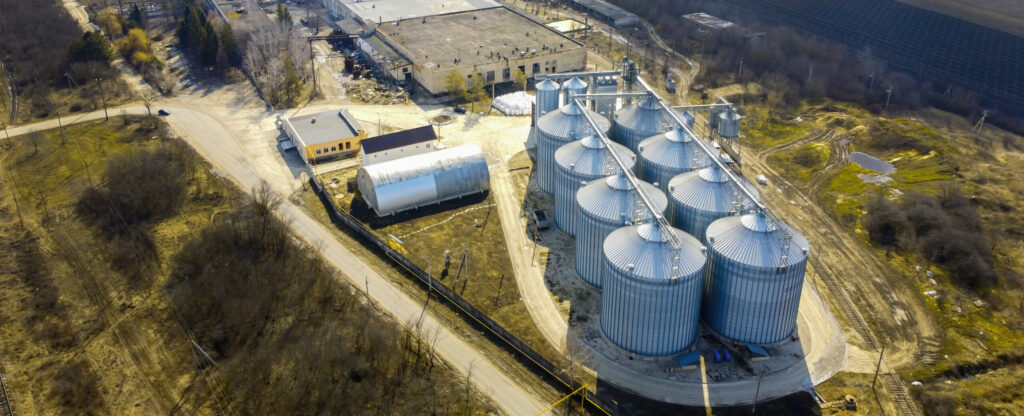
ANP launches public consultation and hearing on third-party access to natural gas gathering and processing infrastructure
On July 16, 2026, the ANP launched a public consultation on a draft resolution governing negotiated third-party access to production offloading pipelines and natural gas treatment or processing facilities.
The offloading pipelines covered by the proposal include both those located within and outside areas subject to oil and natural gas exploration and production contracts. The access regime also encompasses infrastructure used to transport natural gas by-products downstream of processing facilities – including infrastructure connected to refineries – as well as any other facilities integrated into the processing hub that are essential for the withdrawal of separated by-products, such as storage tanks, storage spheres, valves and pumps. The proposed Resolution does not apply to liquefied natural gas (LNG) terminals, LNG liquefaction facilities, LNG regasification units located outside LNG terminals, or LNG conditioning facilities.
Operators will be required to offer both bundled and unbundled services on firm and interruptible bases, with the objective of maximizing available capacity. Capacity offerings must be made, whenever operationally feasible, on at least annual, quarterly, monthly and daily timeframes. Accordingly, operators must make available firm and interruptible services, whether bundled or unbundled, as well as contractual arrangements with different terms.
Access must be granted upon payment of remuneration to the operator under objective, transparent and non-discriminatory terms and conditions. Operators may not require an equity interest as a condition for access and must ensure that access conditions do not discriminate among users, owner-users and third parties requesting the same service. Owner-users retain a preferential right to reserve firm capacity for the transportation, treatment or processing of their own products; however, this preferential right may not be exercised to create contractual congestion or to prevent third-party access. The owner’s preferential capacity right will expire 30 years after the publication of the facility’s first operating authorization or its commercial operation date.
Operators must provide a reasoned written response to an access request within seven business days of its submission by the interested third party or user. Once negotiations are initiated, the negotiation plan must be made available within 30 days after both parties agree to commence discussions, and negotiations regarding contractual terms and conditions must be concluded within 90 days from the date the plan is submitted to the ANP.
The remuneration must be consistent with the risks associated with the activity and reflect the conditions of an effectively competitive market, corresponding to the efficient costs of providing the service, including a return on invested capital compatible with the associated risks. The earnings of economic rents arising from the exercise of market power is expressly prohibited. The ANP may determine that reference revenues serve as the maximum remuneration whenever it identifies evidence of market power, the absence of an agreement after negotiations conducted within a reasonable period, or non-compliance with the principles established by the Resolution.
Each owner or operator must jointly prepare and publish, together with interested third parties, a Code of Conduct and Access Practices for its facilities, in accordance with industry’s best practices and ANP guidelines, subject to prior approval by the Agency. Among other matters, the Code must establish the natural gas quality specifications applicable to the facility. Operators must also publish on their websites the permitted natural gas specification range applicable to the infrastructure, including, in the case of unprocessed gas, the acceptable limits for impurities and contaminants.
Public Consultation No. 13/2026 will receive comments until August 31, 2026, through the following link. The public hearing is scheduled for September 16, 2026, and registration is available through the following link.
Advances in the Commercialization of the Federal Government’s Natural Gas
On July 30, 2026, the CNPE approved a resolution regulating the commercialization of natural gas by the Federal Government, amending CNPE Resolution No. 15/2018. The resolution provides that natural gas may be sold in the free market through auctions conducted by PPSA, with priority given to the chemical, petrochemical, fertilizer, and steel industries. According to the MME, the measure could reduce the price of the Federal Government’s natural gas by up to 50%.
Short-term auctions, covering natural gas production for the following year, are expected to be held annually beginning in late 2026. Long-term auctions, in turn, are expected to begin in 2030 and will be restricted to priority industries.
The new resolution will be published in the Federal Official Gazette.
On July 20, 2026, ANP Ordinance No. 365/2026 was published, establishing a Special Committee to examine disputes regarding PPSA’s access to Petrobras’ gathering and processing infrastructure.
According to the ANP, negotiations concerning access to infrastructure in the Santos Basin have been ongoing for more than four years, significantly exceeding the 180-day period established by CNPE Resolution No. 3/2022 for the conclusion of infrastructure access agreements.
The Committee is composed of ANP technical staff and will investigate the disputes as well as potential evidence of anti-competitive conduct between the parties, without prejudice to the jurisdiction of CADE (Administrative Council for Economic Defense). Representatives of public authorities, public and private entities, and industry experts may also be invited to participate in the Committee’s meetings.
The Special Committee will operate for an initial term of 270 days, extendable for an additional 90 days.
ANP orders revision of the compliance schedule for the Caraguatatuba Natural Gas Processing Unit
On July 10, 2026, the ANP’s Board of Directors ordered Petrobras to revise, within 30 days, the action plan for the compliance of the Caraguatatuba Natural Gas Processing Unit.
The revised plan must align the facility with the minimum methane content requirements established by ANP Resolution No. 982/2025. According to the ANP’s technical staff, the original implementation schedule submitted by Petrobras—which contemplated completion only in 2031—is inconsistent with the expected expansion of Brazil’s domestic natural gas supply.
Nevertheless, the commercialization of natural gas produced at the Unit remains temporarily authorized by the ANP in order to avoid disruptions affecting consumers and local distribution companies. Renewal of the authorization will be assessed in 2027 and will be conditional upon compliance with the revised implementation schedule.
Fuels & Biofuels

CNPE prohibits the use of imported biodiesel to comply with the mandatory diesel blending requirement
On July 14, 2026, the CNPE approved a resolution prohibiting the use of imported biodiesel to comply with Brazil’s mandatory biodiesel blending requirement applicable to diesel fuel. Under the new rule, only biodiesel produced by facilities authorized by the ANP may be used for mandatory blending purposes. The commercialization of imported biodiesel remains permitted for other applications.
According to the Ministry of Mines and Energy (MME), Brazil’s domestic market has adequate supply conditions, compatible with current demand and installed production capacity. Consequently, the restriction on imported biodiesel is intended to protect the domestic industry. The measure is based on the conclusions of the Regulatory Impact Assessment (RIA) prepared by the Interministerial Working Group in 2023, which identified significant idle production capacity within the Brazilian biodiesel industry.
The Resolution will be published in the Federal Official Gazette.
ANP loosens regulatory requirements for voluntary biodiesel uses
On July 10, 2026, the ANP’s Board of Directors included in the Agency’s 2025–2026 Regulatory Agenda the revision of ANP Resolution No. 910/2022, which governs the prior authorization required for the experimental or specific use of pure biodiesel (B100) or biodiesel blends exceeding the mandatory blending percentage with diesel fuel. The initiative aims to harmonize the ANP’s regulatory framework with the amendments introduced by Law No. 14,993/2024 (the Future Fuels Law), which eliminated the requirement for prior ANP authorization for certain voluntary uses of biodiesel.
Under the new guidelines, experimental uses will require only prior notification to the ANP when intended for specific sectors, including public transportation, rail transport, inland and maritime navigation, captive fleets, mining equipment, electricity generation, tractors and agricultural machinery.
The revision of the procedures applicable to experimental and specific uses also requires amendments to related regulations. Accordingly, ANP Resolutions No. 950/2023, No. 959/2023 and No. 987/2025—governing, respectively, fuel distribution authorizations, foreign trade in petroleum products and biofuels, and biofuel production—will also be revised.
In addition, pursuant to the Future Fuels Law, the ANP will immediately publish the list of voluntary users that notify the Agency of their intended voluntary use of biodiesel, including those previously authorized under ANP Resolution No. 910/2022. Listed users will be permitted to purchase biodiesel directly from producers as well as from fuel distributors and importers.
CNPE Resolution establishes temporary E32 gasoline blend for 180 days
On July 30, 2026, CNPE Resolution No. 9/2026 was published, temporarily and exceptionally increasing the mandatory content of anhydrous ethanol in both regular and premium gasoline (Gasoline C) to 32% (E32) throughout Brazil.
The measure aims to reduce Brazil’s dependence on international crude oil markets in light of the ongoing conflicts in the Middle East.
The ANP clarified that all other gasoline specifications established by ANP Resolution No. 807/2020 remain unchanged. With respect to enforcement, inspections and penalties will only apply after the adaptation periods established under Article 15-B of the Resolution: 30 days for fuel distributors operating in the Northern Region and 15 days for distributors in all other regions; and 60 days for fuel retailers in the Northern Region and 30 days for retailers in all other regions.
The measure entered into force on August 1, 2026, with an initial validity period of 180 days, renewable only once for an additional 180-day period.
ANP launches public consultation on maritime fuel specifications
On July 28, 2026, the ANP launched a public consultation on a draft resolution amending ANP Resolution No. 903/2022 to update the technical specifications applicable to maritime fuels. The proposed amendments seek to align Brazilian regulations with ISO 8217:2024, the international standard that revised the technical specifications for maritime fuels, including new provisions governing blends of conventional fuels with synthetic and renewable fuels.
The draft Resolution introduces technical specifications governing the use of maritime diesel oil (MDO) and the incorporation of renewable components into marine fuel oils (MFO). It also establishes mandatory testing methods to verify fuel stability and compatibility. Initially, the use of maritime biofuels will remain voluntary and may be carried out by fuel producers, distributors and terminal operators acting on behalf of those market participants.
Public Consultation No. 15/2026 will receive comments until September 10, 2026, through the following link. The public hearing will be held on September 23, 2026, subject to prior registration through the following link.