

Editorial

June 2026 was marked by significant regulatory developments in the oil, natural gas and fuels sectors. In the upstream segment, particular attention is drawn to the studies approved by the ANP for the potential offering of new exploration blocks in the Equatorial Margin. Additionally, the STF reaffirmed the constitutionality of the regulation exempting all-electric offshore platforms from the maximum pollutant emission limits for fixed sources.
In the natural gas market, ANP Resolution No. 1,003/2026 was published, establishing rules for negotiated and non-discriminatory access to LNG terminals. Furthermore, the ANP released a technical study on the fungibility of the Brazilian Gas of Origin Certificate (CGOB) and published an analysis of submissions regarding the Gas Release.
In the fuels sector, ANP Resolutions No. 1,004/2026 and 1,005/2026 were published, setting out criteria for identifying abusive increases in fuel prices by distributors and retailers.
In the oil pipeline sector, EPE published the Indicative Oil Pipeline Plan – 2025 Cycle. With regard to the hydrogen market, the ANP concluded the work of its Working Group on hydrogen and released studies on its regulation.
Finally, the ANP held a public hearing to review the rules governing the differentiated treatment of micro and small enterprises in enforcement proceedings.
Upstream

ANP approves the designation of blocks in the Equatorial Margin for future cycles of the Permanent Offer under the Concession Regime (OPC)
On 26 June 2026, the ANP approved the nomination of 86 exploration blocks located on the Equatorial Margin for inclusion in the list of areas under consideration for inclusion in future cycles of the OPC.
The blocks are distributed across the Foz do Amazonas, Pará-Maranhão and Barreirinhas sedimentary basins, with 36, 25 and 25 blocks respectively. In addition, the readjustment of Sector SFZA-AP4, in the Foz do Amazonas offshore basin, was approved to include two blocks.
The measure does not affect the 6th Cycle of the OPC, scheduled for 7 October 2026. The blocks in question must still undergo an environmental assessment, receive a Joint Statement from the Ministry of Mines and Energy (MME) and the Ministry of the Environment and Climate (MMA), and be subject to a public hearing before being incorporated into the OPC tender protocol.
Supreme Federal Court (STF) rules that Conama Resolution 501/2021 is constitutional and dismisses the allegation of environmental regression in all-electric offshore platforms
On 18 June 2026, the STF unanimously dismissed ADI 7.467, with Justice Cármen Lúcia acting as rapporteur, and declared CONAMA Resolution 501/2021 to be constitutional. The contested provision amended Annex V of CONAMA Resolution 382/2006 to exempt electrified oil platforms, located beyond Brazilian territorial waters, from the maximum limits on atmospheric pollutant emissions from fixed sources — provided that the electrical output of each turbogenerator is less than 100 MW.
The action was brought by the Attorney General of the Republic on the grounds that Resolution No. 501/2021 had promoted a “complete deregulation” of the environmental protection regulatory framework. According to the complaint, by eliminating emission limits applicable to electrified offshore platforms without establishing any alternative parameters, CONAMA allegedly violated the principles of prevention, precaution, and the prohibition of environmental regression, in addition to providing deficient protection of the fundamental right to an ecologically balanced environment as guaranteed under Article 225 of the Federal Constitution.
The argument of unconstitutionality, however, was not supported by the technical and legal evidence submitted in the proceedings.
The Supreme Court found that CONAMA Resolution No. 382/2006 had never been designed to regulate offshore platforms. As demonstrated in the case record through documentation produced by CONAMA’s own Technical Chamber for Environmental Control and Quality, the regulation was structured as a preventive instrument aimed at controlling atmospheric pollution in urban and industrialized areas. Article 2 provides that emission limits are to be established based on the degree of saturation of the region where the undertaking is located – a criterion which, by definition, does not apply to structures installed hundreds of kilometers offshore in a marine environment with no surrounding population. CONAMA Resolution No. 436/2011 had already adopted the same rationale, expressly excluding gas turbines located beyond the territorial sea from its scope.
Furthermore, it was recognized that the all-electric FPSO configuration enabled by Resolution No. 501/2021 results in a reduction of up to 20% in total greenhouse gas and NOx emissions when compared to the previous model, which combined gas turbines with turbo-compressors for supplementary power generation. Without the new regulation, Pre-Salt platforms – which require more than 100 MW to operate in ultra-deep waters – would be forced to rely on technologically inferior and environmentally more burdensome arrangements. Declaring Resolution No. 501/2021 unconstitutional would therefore, paradoxically, impose upon the sector a solution associated with higher pollutant emissions, in addition to the resulting financial impacts.
Lastly, the STF held that the absence of source-specific emission limits in Annex V does not equate to the absence of environmental regulation. Oil exploration platforms remain mandatorily subject to federal environmental licensing, supported by an EIA/RIMA pursuant to CONAMA Resolution No. 01/1986 – the most stringent environmental impact assessment mechanism provided for under Brazilian law. Within the licensing process, IBAMA assesses the entirety of the project’s atmospheric impacts and imposes project-specific conditions. In addition, the National Climate Change Policy (Law No. 12,187/2009), Brazil’s commitments under the Paris Agreement, the Pre-Salt Law (Law No. 12,351/2010), and the recently enacted Law No. 15,190/2025 collectively form a robust regulatory framework for emissions control.
Justice Cármen Lúcia expressly acknowledged the submissions made by the Brazilian Institute of Oil and Gas (IBP) and Petrobras, admitted as amici curiae, in shaping her conviction, and held that the mere allegation of a demonstrated failure to comply with protective constitutional principles is insufficient, in itself, to establish unconstitutionality. Finally, the STF recommended that CONAMA, when further refining Resolution No. 501/2021, conduct a more robust deliberative process, supported by comprehensive technical opinions and the participation of environmental enforcement authorities.
The ruling in ADI No. 7,467 consolidates an essential premise of Brazilian environmental law: the prohibition of environmental regression does not mean regulatory rigidity. As recognized by the STF, the prohibition of regression applies to the elimination of the essential core of constitutional environmental protection – not to every amendment of a regulatory instrument. Where a regulatory change produces a measurable environmental improvement, it does not constitute regression; it constitutes progress.
Natural Gas and Biomethane
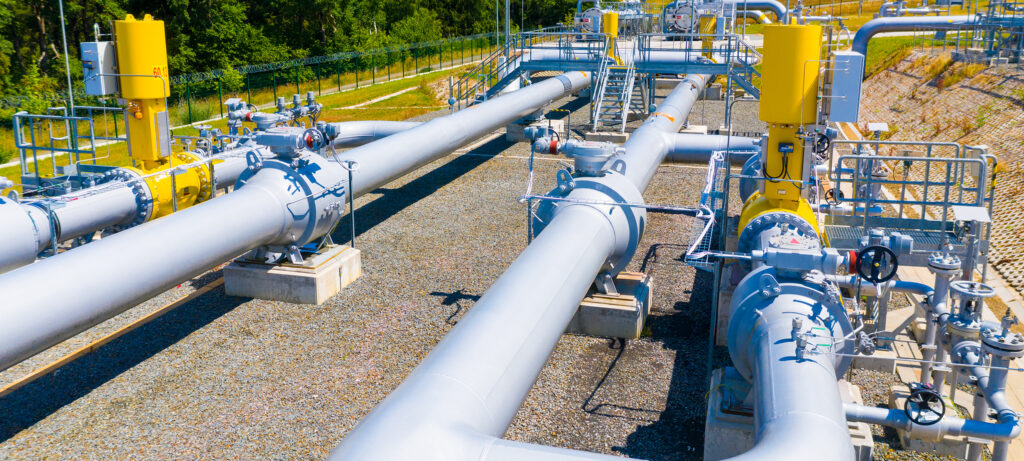
ANP publishes Resolution No. 1,003/2026 on third-party access to LNG terminals
ANP Resolution No. 1,003/2026, dated July 1, 2026, establishes the regulatory framework governing negotiated and non-discriminatory third-party access to LNG terminals. The regulation represents a significant milestone for the sector, providing a comprehensive framework for third-party access to LNG infrastructure and setting forth detailed rules aimed at promoting transparency, competition, and the efficient use of existing facilities.
Scope and Applicability
Third-party access to LNG terminals is regulated on the basis of voluntary commercial agreements negotiated in good faith between the parties. Excluded from the scope of the Resolution are liquefaction or regasification units located outside the physical boundaries of the terminals, as well as LNG storage and handling facilities.
General Principles and Transparency
Access shall be granted upon payment of remuneration to the LNG terminal operator, under objective, transparent, and non-discriminatory terms and conditions, in compliance with Law No. 14,134/2021 (the “New Gas Law”).
Integrated and unbundled services must be offered on both firm and interruptible bases, with a minimum offering frequency of annual, quarterly, and monthly products. The operator must keep updated and make publicly available, through an electronic platform, information regarding available and idle capacities, slots, capacities corresponding to each service modality, products offered, and contracting conditions.
Owner’s Preferential Right
The owner-user is entitled to reserve firm capacity for the transportation and handling of its own products at LNG terminals through the owner’s preferential right.
The owner is expressly prohibited from using its preferential right to create contractual congestion or to prevent access by interested third parties. Likewise, capacity allocated pursuant to the owner’s preferential right may not be used for the benefit of third parties.
ANP shall determine the capacity over which the preferential right may be exercised, in accordance with the provisions of the Resolution.
Once the preference right is established at a level below the terminal’s operational capacity, the difference shall be deemed available capacity for third-party access, and the owner shall be prohibited from using its reserved portion for the benefit of third parties.
Where the owner-user consists of multiple companies, the allocation of the preferential right among them shall be freely agreed and formalized in a contract with the operator.
The owner may partially or fully waive its preferential right, thereby creating available capacity, provided that such a waiver is published on its website and communicated to ANP within 15 days. Any waiver prior to the end of the applicable term shall be subject to ANP approval.
During the first 10 years following the issuance of the initial operating authorization, the preferential right may correspond to the entirety of the terminal’s operational capacity in the case of new facilities, or to the entirety of the additional capacity resulting from an expansion. 30 years after the publication of the first operating authorization, the owner’s preferential right shall be reduced to zero.
The preferential right shall be reviewed every five years based on the operator’s proposal. In determining the applicable preference right, ANP shall consider the lowest of the following values: (i) the owner’s average monthly throughput during the 36 months preceding the end of the applicable five-year period; (ii) the value of the preferential right requested by the owner for the new period; and (iii) the value of the preference right currently in force.
In the event of a change of ownership, the new owner shall succeed to the same preferential-right conditions as its predecessor until the next ANP review.
The operator must publish on its website the owner’s preferential right for each LNG terminal, identifying the respective owner-users and the applicable terms, expressed both for integrated services and unbundled services, where applicable.
Request and Negotiation Process
The operator must respond in writing, with supporting reasons, to any third-party access request within a maximum period of seven business days.
Once negotiations have commenced, the parties shall have 30 days to conclude negotiations on a non-discriminatory basis. If no agreement is reached, either party may submit the dispute to ANP for resolution.
Access may only be denied upon demonstration of a technical incompatibility between the characteristics of the facility and the requested service.
Agreements, Remuneration, and Code of Conduct
The term of terminal use agreements, as negotiated between the parties, may not exceed 15 years.
The owner and the operator, together with interested third parties, shall prepare and submit for ANP approval a code of conduct and access practices for each terminal within 90 days of the Resolution entering into force.
The code of conduct must establish the principles and procedures governing non-discriminatory access and serve as guidance for negotiations between the operator and third parties.
Accounting Separation, Vertically Integrated Companies, and Competition
Terminal-owning companies engaged in more than one activity must maintain separate accounts for terminal operations and their other activities in order to prevent discrimination, cross-subsidization, and distortions of competition.
A vertically integrated operator must disclose, on a monthly basis, the capacity effectively utilized under the owner’s preferential right, as well as the capacity used by affiliated companies.
Interconnection with Pipelines
Interconnection between LNG terminals and gas transportation pipelines is mandatory.
ANP may deny authorization for a terminal that, without justification, is not connected or does not intend to connect to a gas transportation pipeline.
The terminal operator must demonstrate, through technical and economic-financial evidence, the impossibility of interconnection with other natural gas infrastructure facilities.
Compliance Deadlines
Contracts with users executed prior to the publication of the Resolution must be submitted to ANP within 60 days.
ANP shall review such contracts and may notify the operator to implement the required amendments within an additional 90-day period, counted from receipt of the notification.
ANP publishes technical report on the fungibility of CGOB
On 26 June 2026, the ANP approved a technical study on the fungibility of the CGOB with other environmental attribute certificates, as provided for in Article 20 of Law No. 14,993/2024, regulated by Decree No. 12,614/2025 and implemented by ANP Resolution No. 996/2026. The regulatory framework does not impose automatic or unrestricted fungibility but makes its application conditional upon technical suitability and the absence of risks to the integrity of the system, with the prohibition on double counting being an insurmountable limit.
The contributions received converged on key points: (i) an absolute prohibition on double counting; (ii) a distinction between fungibility and the coexistence of instruments (particularly CGOB and CBIO); (iii) recognition of the CGOB as the central regulatory instrument; (iv) the need for segregation of uses; (v) the importance of a centralised and auditable register; and (vi) rejection of automatic fungibility with certificates of a different legal nature.
In the ANP’s view, significant differences persist between the CGOB and the other certificates analysed (GAS-REC, GOGas and the European GO), particularly regarding the nature of the certified attributes, the methodologies used, the units of measurement and the operational rules, which constitute the main constraint on fungibility.
By deliberate regulatory choice, Resolution No. 996/2026 did not automatically recognise any certificate as fungible with the CGOB; this does not constitute an illegal regulatory gap, but rather a decision to safeguard the CGOB during its initial implementation phase.
It was concluded that: the current regulations fulfil the minimum legal mandate; the model adopted is one of ‘fungibility by validation’ rather than ‘automatic equivalence’; any regulatory changes should be gradual and preceded by an assessment of market maturity; and the preservation of the CGOB’s integrity must take precedence over short-term marginal gains.
In this context, (i) it was recommended that ANP Resolution No. 996/2026 remain in full force and effect and that market development be assessed as part of the Regulatory Impact Assessment (RIA) to be carried out in three years’ time; and (ii) it was suggested that fungibility should first be tested in the voluntary market, as this presents lower systemic risk and allows for regulatory learning, before proposing rules for the acceptance of other certificates to meet mandatory national targets.
ANP grants gas importers a grace period to comply with quality control standards
On 12 June 2026, the ANP Board approved the granting of an additional period of 90-day for natural gas importers to comply with the quality control requirements set out in ANP Resolutions No. 982/2025 and No. 828/2020.
The regulations require the issuance of certificates attesting to the quality of imported gas, in accordance with Articles 5 and 7 of ANP Resolution No. 982/2025, as well as the monthly submission of quality data via the ‘From Well to Station’ system. However, in view of the difficulties relating to certification, the Agency has granted an extension to the deadline for compliance with these obligations, including the submission of retrospective data for the reference period commencing on 1 June 2026.
ANP publishes results of consultation on Gas Release
On 23 June 2026, the ANP published its analysis of the responses to the questionnaire on Gas Release (Programme to Reduce Concentration in the Natural Gas Market). The consultation received contributions from stakeholders in the natural gas sector regarding the programme’s design, particularly aspects such as the definition of volumes, the programme’s duration, marketing structures, product specifications, auction models, access to essential infrastructure, competition safeguards and monitoring mechanisms.
The analysis of the responses concluded that participants generally recognise the Gas Release as an appropriate and necessary instrument for promoting competition in the natural gas market in Brazil. The suggestions will be used to inform the preparation of a Regulatory Impact Assessment and, subsequently, the regulation of the Gas Release.
Fuels

ANP publishes resolutions on abusive fuel price increases
On 2 July 2026, the ANP published ANP Resolutions No. 1,004/2026 and No. 1,005/2026, which set out criteria for determining whether fuel distributors and retailers have engaged in abusive price increases, respectively.
ANP Resolution No. 1,004/2026 deals with the abusive price increases by LPG distributors. The document provides for a two-stage investigation: (i) a preliminary analysis, which identifies evidence of abusive price increases based on the difference between the reference gross margin and the gross margin applied by the operator, and (ii) an in-depth analysis, which considers documentary, accounting and operational evidence to verify the infringement.
ANP Resolution No. 1,005/2026 addresses price increases by LPG retailers and sets out a three-stage procedure for investigating abusive price increases: (i) a summary analysis, based on a simplified assessment of evidence; (ii) a screening analysis, to identify evidence justifying the continuation of the investigation; and (iii) an in-depth analysis, in which an investigation will be carried out into resale costs in relation to the increase in the gross margin.
Only after the investigation has been fully completed will a notice of infringement be issued. The proposal stipulates that the fine must be proportionate to the economic gain obtained from the abusive price increase, considering aggravating circumstances and the proportionality of the sanction in relation to the conduct.
In addition, the ANP has launched a consultation on the revision of ANP Resolution No. 915/2023, which regulates the imposition of administrative sanctions and defines the criteria for determining prior offences and repeat offences for the purpose of imposing fines on operators in the fuel supply market. The contributions, which closed on 12 June, will be used to inform the Regulatory Impact Assessment and, subsequently, to draft the resolution.
Pipelines
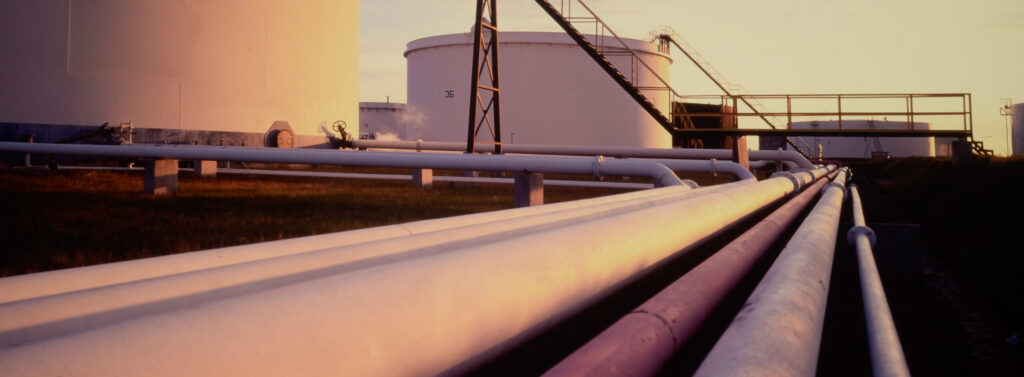
EPE publishes Indicative Pipeline Plan for the 2025 cycle
On 10 June 2026, EPE presented the Indicative Pipeline Plan – 2025 Cycle (“PIO”). The main purpose of the PIO is to contribute to improving national energy planning by identifying opportunities and proposing guidelines for the development of pipeline infrastructure for the transport of liquid fuels, considering projections for the demand for and supply of petroleum products and biofuels, as well as an analysis of the condition of existing infrastructure.
In this cycle, nine projects were proposed, divided across three strategic areas: (i) the supply of aviation kerosene (QAV) to high-traffic airports; (ii) the transport of ethanol production from the Central-West Region; and (iii) the distribution of petroleum products to regions with growing demand.
In the 2025 cycle, projects aimed at supplying AVK have a short-term implementation horizon (2026–2029), whilst petroleum product pipelines fall within the medium term (2029–2034) and ethanol pipelines, due to their length and the need for modal integration, are geared towards the long term (from 2034 onwards).
Pipeline projects for transporting QAV present greater challenges in terms of economic viability, mainly due to low volumes and short distances, whilst all pipeline projects for transporting ethanol have demonstrated economic viability when pipeline tariffs are compared with those of road transport.
Estimates of job and income generation indicate that the projects deemed viable could contribute to an increase of up to 0.24 per cent in Gross Domestic Product (GDP), equivalent to R$ 27.1 billion, and create up to 108,300 jobs during the construction phase.
Compared with the previous cycle of the PIO, there has been a broadening of the analytical scope, with the incorporation of new themes, regions and methodologies, and the number of projects assessed has almost doubled, reflecting the continuous improvement of the instrument and the growing demand for integrated and sustainable logistics solutions.
By providing detailed technical studies and replicable methodologies, the Plan contributes to the creation of an environment more conducive to attracting investment, modernising logistics infrastructure and promoting a supply sector aligned with Brazil’s potential and challenges.
Hydrogen
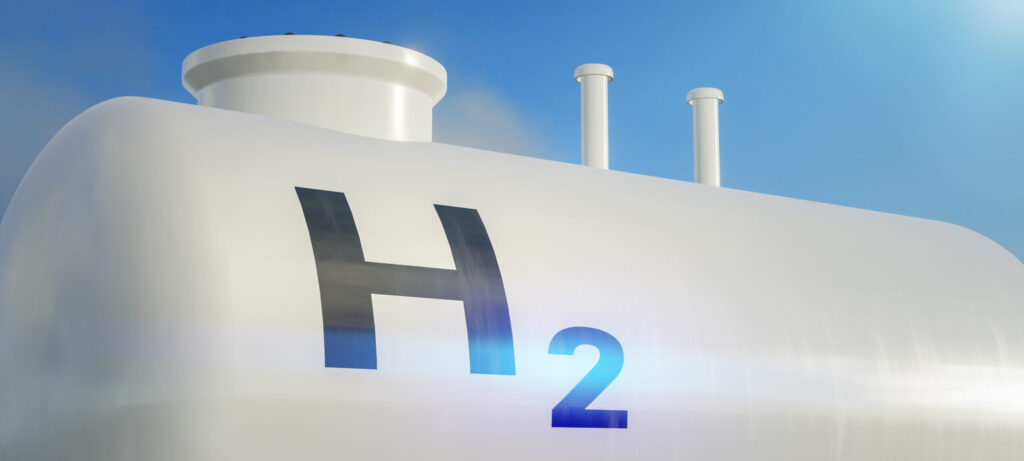
ANP publishes reports on hydrogen
On 29 May 2026, the ANP Board approved the final report of the Hydrogen Working Group. The document addresses the regulation of the hydrogen market and institutional challenges. In addition, five reports were published on topics relevant to the Brazilian hydrogen market.
The report by Subgroup 1 concludes that blending hydrogen into Brazil’s natural gas transmission network poses significant technical and regulatory risks, particularly due to the weakening of high-pressure steel pipelines, the reduction in the energy content of the blends, and the limitations of existing metering systems. The absence of specific metrological regulations from Inmetro for H₂ exacerbates the legal uncertainty surrounding the model. By comparison, international experience reveals significant differences, with the European Union prioritising dedicated networks for pure H₂ over mixtures. Against this backdrop, the report identifies as the most viable alternatives the introduction of H₂ into state distribution networks — where lower pressures and HDPE pipes reduce risks — and the development of dedicated hydrogen infrastructure (preferably based on hubs), designed from the outset for this energy source. Subgroup 2 analysed the incorporation of natural hydrogen into Brazil’s regulatory framework for exploration and production, drawing on the established experience of the oil and gas sector. For deposits in sedimentary basins, the existing concession regime is proposed, with the inclusion of natural hydrogen as an additional subject matter in current or future contracts, through contractual addenda.
For crystalline substrates, where there is no association with petroleum systems, a simplified and flexible model is suggested to be tested initially through pilot projects under the supervision of the ANP, prioritising the generation of technical knowledge and the development of a new production chain.
The report rules out the use of a regulatory sandbox for these activities, given their complexity and risks, and highlights the need for regulatory revisions at the ANP — both ad hoc and structural — to address the specific characteristics of this new resource. The conclusion is that Brazil possesses the institutional conditions to begin this structuring process, provided it is guided by the principles of legal certainty, regulatory proportionality and progressive regulatory development.
Furthermore, Subgroup 3’s report set out guidelines for the authorisation of activities in the low-carbon hydrogen value chain, in accordance with Law No. 14,948/2024, with a focus on informing the sector’s future Regulatory Impact Analysis. Given the technological and economic uncertainties characterising the early stages of the Brazilian market, it is proposed that experimental regulation be adopted, based on pilot projects and regulatory sandboxes, allowing models to be tested and evidence to be gathered before definitive rules are established. The three priority areas cover authorisations for hydrogen production, logistical and commercial activities, and product quality specification and certification. As its main output, the Sub-group produced the Manual for Applying for Authorisations, approved by the ANP’s Executive Board, which standardises procedures, increases predictability and provides non-binding guidance to stakeholders during the regulatory transition period.
Subgroup 4 addressed operational safety in the development of low-carbon hydrogen projects. The international analysis revealed a diverse landscape of regulatory approaches, with convergence on the principles of proportionality to risk and lifecycle management of facilities, with the oil and gas sector model frequently being extended to hydrogen. At national level, the ANP’s regulatory framework — particularly the SGSO — already includes instruments compatible with the new legal requirements, providing a solid basis for a regulatory transition. The sub-group recommends the inclusion of specific regulatory action in the ANP’s agenda, the adoption of pilot schemes during the transitional period, and regulatory updates that clarify the Agency’s remit in the hydrogen sector.
Law No. 14,948/2024 established hydrogen certification as a central instrument of the National Low-Carbon Hydrogen Policy, conferring environmental credibility and traceability on the various technological pathways. The regulatory decree has not yet been published, but the ANP has been taking preparatory steps, providing technical support to the Ministry of Mines and Energy (MME) in drafting the bill, with an emphasis on the design of the certification system. The draft under discussion assigns to the ANP the role of regulatory authority for the Brazilian Hydrogen Certification System (SBCH2), with powers to define life-cycle analysis methodologies, traceability and chain-of-custody criteria, and to oversee the system’s operation. Subgroup V was established within the ANP’s Hydrogen Working Group to further the technical and regulatory debate and to inform the development of the certification model, considering both national experiences — such as RenovaBio and the Biomethane Guarantee of Origin Certificate — and international ones. The report consolidates the Sub-group’s findings with the aim of guiding the coherent and consistent implementation of SBCH2 in light of the new legal framework. The envisaged institutional framework involves the ANP’s interaction with accreditation bodies, certification bodies and registration systems, with an emphasis on the segregation of duties, data integrity and trust in the system. The Agency’s accumulated experience with other certification schemes is highlighted as a key asset in ensuring that the Brazilian hydrogen certification model is compatible with international best practices.
Despite the Working Group’s closure, the technical departments will continue to study the subject, which is set to form part of new initiatives on the ANP’s Regulatory Agenda.
Enforcement

ANP holds public hearing on enforcement rules for micro and small enterprises
On 16 June 2026, the ANP held a public hearing on the proposed revision of ANP Resolution No. 759/2018, which sets out criteria for the differentiated treatment of micro-enterprises and small enterprises in enforcement actions by the Agency and its partner bodies.
The proposal provides for an update to the circumstances under which differentiated treatment may be excluded, an extension of notification deadlines, and editorial adjustments to ensure greater clarity in the application of the resolution.
The amendments also provide for the exclusion of the benefit in situations involving non-compliance with operational safety requirements, direct and imminent danger, or irregularities relating to the unauthorised addition of solvents to fuels.